
Close government–business relationships helped deliver major infrastructure projects in Iloilo City
Close government–business relationships helped deliver major infrastructure projects in Iloilo City 16 January 2026 This article examines Iloilo City as an alternative model of government–business relations, built on a stable local political system and strong informal ties with the business sector. Since the early 2000s, partnerships among national and local leaders and business groups have led to key infrastructure projects. Iloilo City’s infrastructure boom, which began in the 2000s, was facilitated by a stable political configuration that enabled a sustained flow of national government funding through congressional and residential pork-barrel allocations, as well as official development assistance (ODA). Political alignment between the city’s local authorities and the two-term Senate President Franklin Drilon, who pushed bureaucracies at the top and leaned on national government entities, enabled unimpeded access to these sources. Personal ties, supplemented by partisan (Liberal Party) connections, lubricated these processes. This consolidated political machine, which included Congressman Jerry P. Treñas and Mayor Jed Patrick Mabilog, committed to a common development logic that promoted constructive rather than collusive private sector influence. Drilon’s leadership downplayed competition among local businesses for influence in the city government. Local business groups are cohesive because of their social connections to politicians, and through their formal interaction in planning platforms organized by the city government. Planning for big-ticket infrastructure projects was facilitated by harmonious business-government ties, orchestrated at the top by Senator Drilon. It also required the cooperation of the city mayors, whose electoral longevity stood to benefit from good economic performance and sustained revenues. Iloilo City achieved major infrastructure projects—an international airport, flood control and Iloilo River rehabilitation, a network of roads and bridges linking transport nodes, and a mega-dam to supply its future water requirements—largely due to this fortunate confluence of events and key leaders. Big infrastructure projects shape partnerships between local governments and businesses because both see them as key to economic growth. The analysis is based on data generated from interviews with Mayor Jerry P. Treñas, and his 2022 campaign manager, city government planning officials, and representatives of business groups and the urban poor. It also draws from previous studies examining Iloilo City infrastructure projects, local newspaper accounts, and economic data from the Iloilo City Planning and Development Office. Author: Rosalie Arcala Hall (Division of Social Sciences, University of the Philippines Visayas) Read the full paper: https://journals.sagepub.com/doi/10.1177/18681034241265724
Thirteen species of the microscopic algae Pinnularia are recorded for the first time in the Philippines
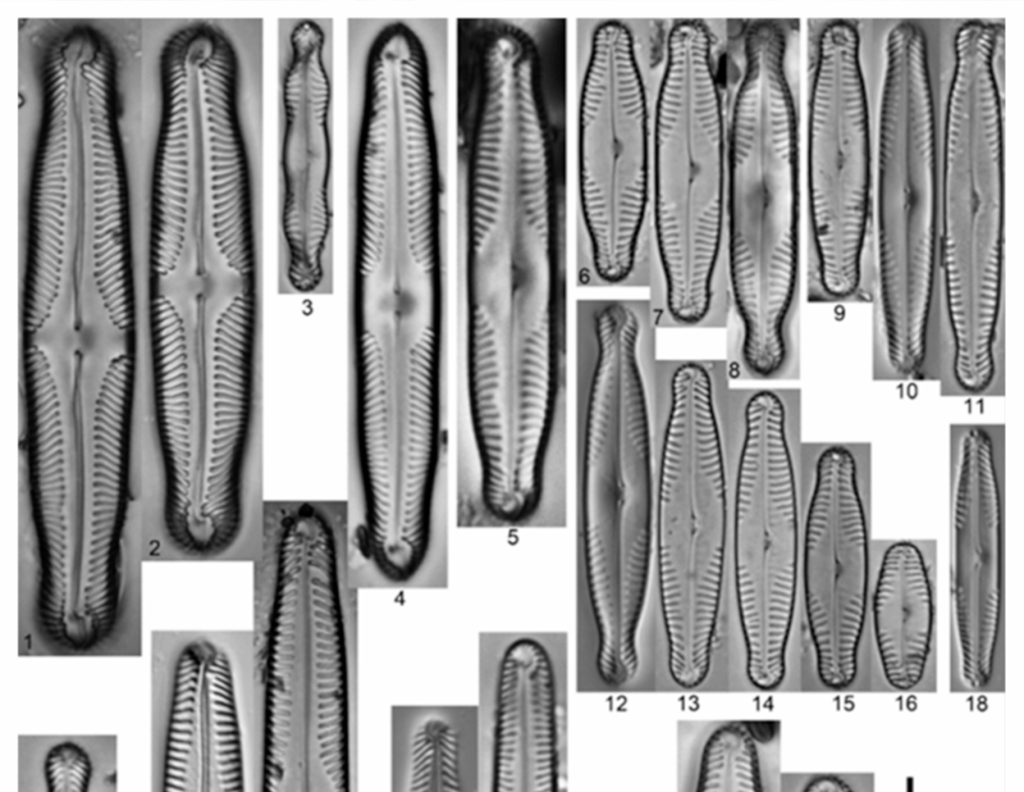
Thirteen species of the microscopic algae Pinnularia are recorded for the first time in the Philippines 13 January 2026 This study explored the tiny algae called Pinnularia—a group of microscopic organisms known as diatoms—in the Marikina River, which flows through the eastern part of Metro Manila. Using a microscope, scientists identified 17 different kinds of Pinnularia living in the river. Out of these, 13 have never been officially recorded in the Philippines before, making them new additions to the country’s list of known freshwater diatoms. Collected from various sections of the river spanning upstream to downstream areas, which encompass a range of land uses within the watershed, each species was carefully described with in-depth taxonomic descriptions and habitat data. While most species identified are cosmopolitan, the presence of Pinnularia divergens var. mesoleptiformis, previously known only from tropical South America, adds a valuable biogeographic insight and may suggest broader distribution patterns or long-distance dispersal events. These microscopic organisms are important because they can help scientists understand the health of freshwater ecosystems. Thus, this research not only adds to what we know about the biodiversity of the Marikina River, but also helps build a scientific foundation for future studies on water quality, river health, and environmental protection in the Philippines. This study holds importance as it presents the first comprehensive taxonomic examination of the diatom genus Pinnularia Ehrenberg in the Philippines. Through detailed morphological analysis, a total of 17 taxa were identified from the Marikina River, including three unidentified forms, thereby bringing the total number of known Pinnularia taxa in the country to 57 based on updated nomenclature from Guiry and Guiry (2024) and Kociolek et al. (2024). Overall, this study not only contributes to the enrichment of the global inventory of freshwater diatoms but also establishes a crucial baseline for future ecological, biogeographic, and applied research involving diatoms in the Philippines. Authors: Milagrosa R. Martinez-Goss (Institute of Biological Sciences, and Museum of Natural History, University of the Philippines Los Baños), Taisuke Ohtsuka (Lake Biwa Museum), Eldrin DLR. Arguelles (Philippine National Collection of Microorganisms, National Institute of Molecular Biology and Biotechnology, University of the Philippines Los Baños), Tohru Ikeya (Research Institute for Humanity and Nature | College of Science and Engineering, Ritsumeikan University), Elfritzson M. Peralta (Department of Biological Sciences, College of Science, Research Center for the Natural and Applied Sciences, The Graduate School, University of Santo Tomas), Rey Donne S. Papa (Department of Biological Sciences, College of Science, Research Center for the Natural and Applied Sciences, The Graduate School, University of Santo Tomas) and Noboru Okuda (Research Institute for Humanity and Nature | Research Center for Inland Seas, Kobe University) Read the full paper: https://philjournalsci.dost.gov.ph/annotated-checklist-and-illustrations-of-pinnularia-species-in-the-marikina-river-rizal-luzon-the-philippines/