
Sunlight for all, solar panels for whom?
Shedding light on a sustainable solar transition for our farms
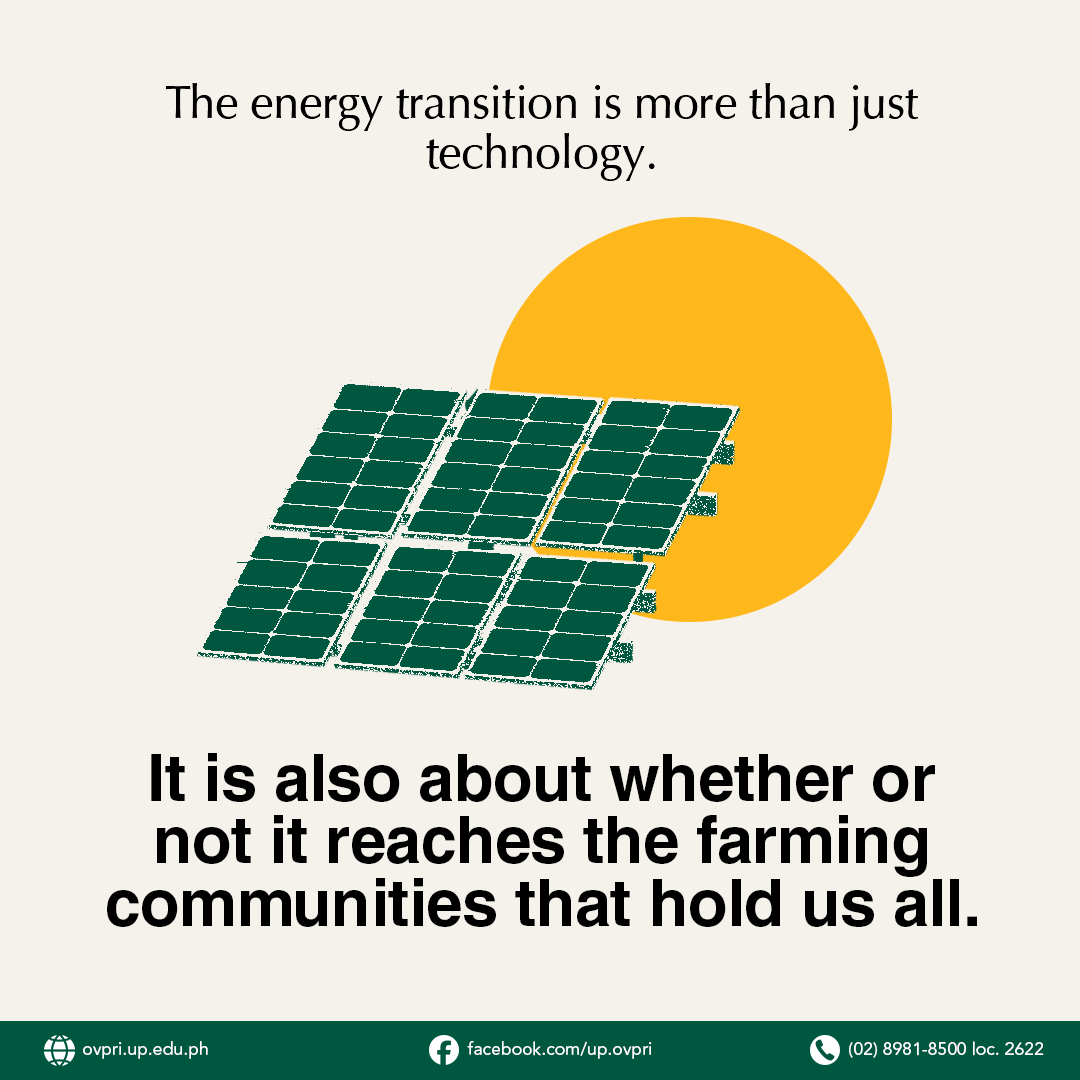
Beyond rising household electricity bills, the energy crisis triggered by the war in the Middle East is also straining the backbone of our economy: the agriculture sector.
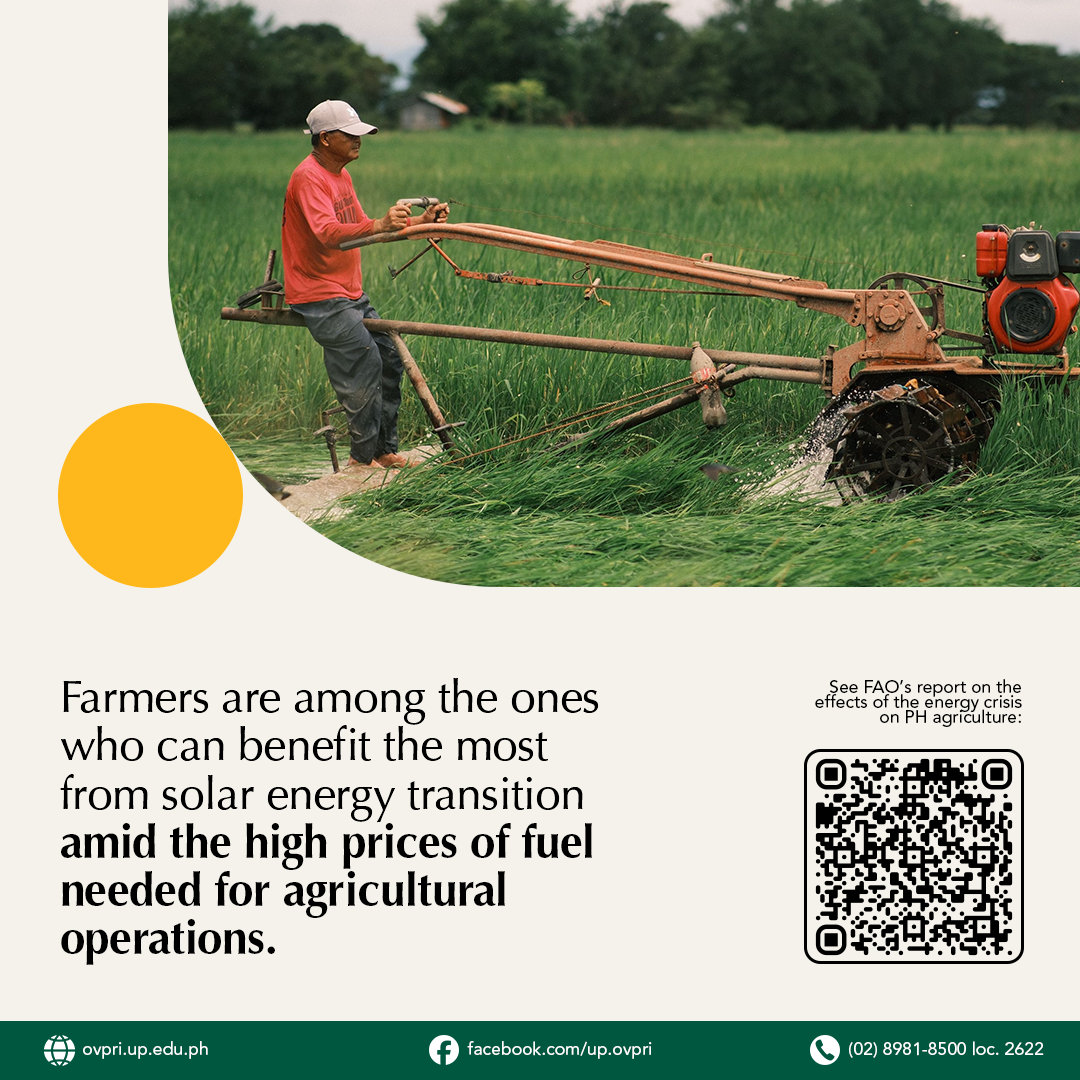
According to the Food and Agriculture Organization, Filipino farmers are now “growing under pressure” with rising costs of fuel needed to sustain irrigation and mechanization.
In this context, calls for a renewable energy transition in the Philippines have grown more urgent than ever, and solar has emerged as the loudest among them.
Agriculture is among the sectors that stand to benefit most in the said transition. Agaton and Guno (2024) argue that adopting a solar-powered irrigation system (SPIS), despite its reputation for requiring high startup capital, is in fact economically viable.
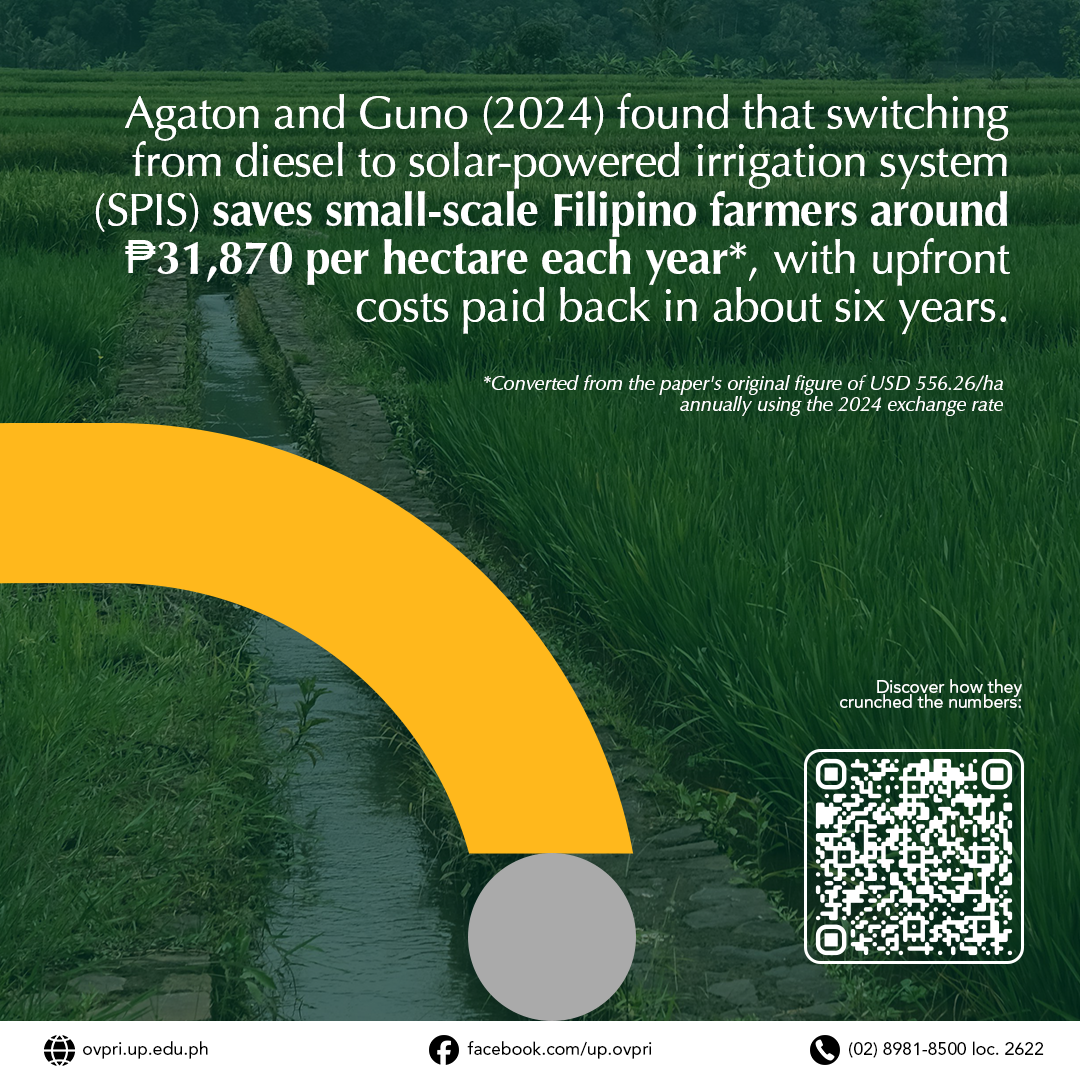
The researchers crunched the numbers two ways: first comparing the long-term costs and savings of solar against diesel, then stress-testing the results against unpredictable diesel prices. They found that switching from diesel to solar-powered irrigation saves small-scale Filipino farmers around USD 556.26/ha per year (₱31,870/ha using the 2024 conversion rate), with costs recovered in about six years.
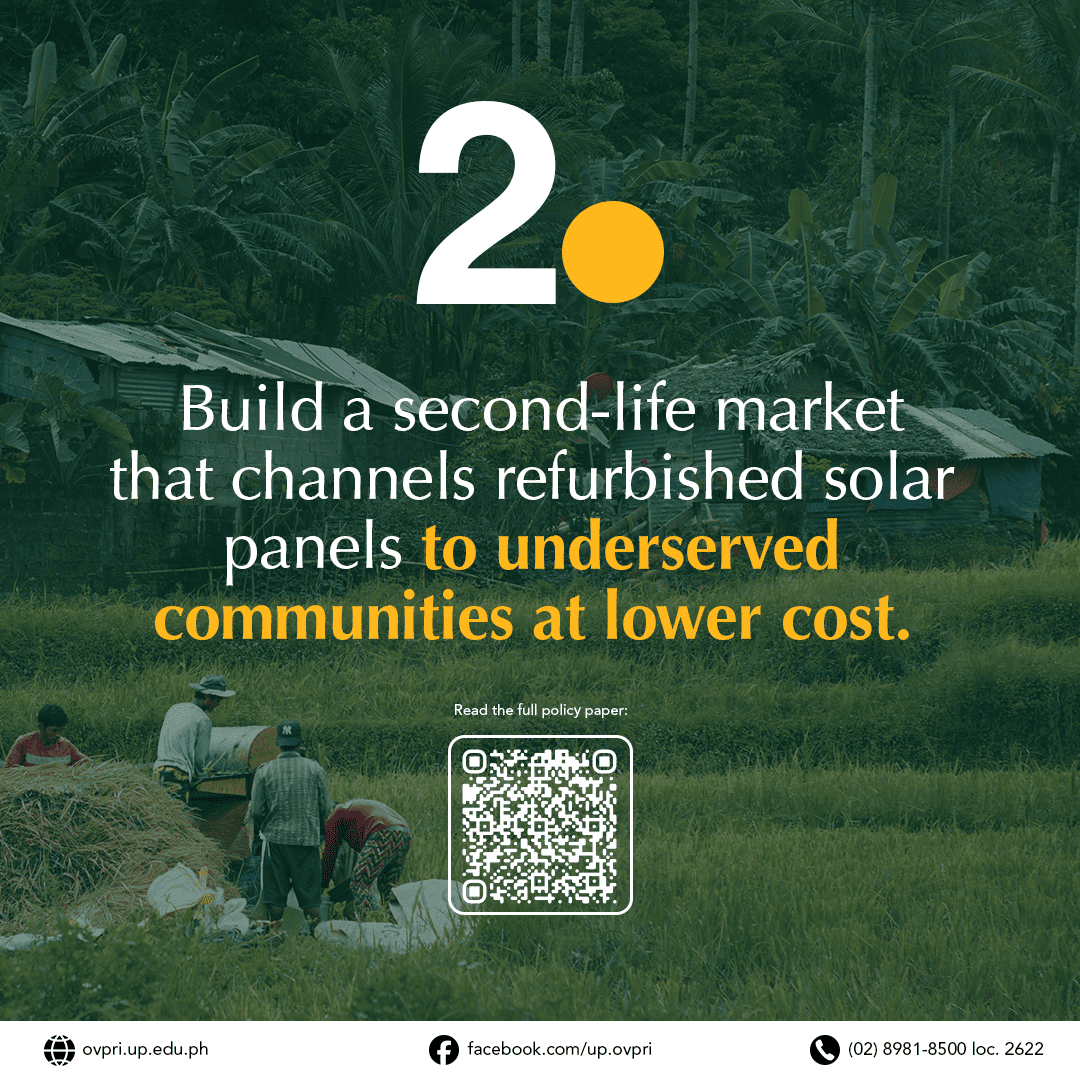
The UP CIDS policy paper on solar panel management through circular economy principles also offers insights into making solar use more inclusive. The first is creating a second-life market that channels refurbished but still-functional panels to rural and underserved communities, extending clean energy access without requiring new utility-scale capacity. The second is extended producer responsibility (EPR) legislation, which would require manufacturers and importers to take back panels at end-of-life and finance their collection, refurbishment, and redistribution.
Utilizing available technologies for the energy transition is only half the work. The other half—who gets to use it—decides whether this technology reaches a privileged few, or extends to the farming communities that hold us all.